
Mirriam Chakabarwa (40) is a passionate small-scale farmer from Matiashe Village, Ward 8, under Chief Muusha in Chimanimani District. She works with PELUM Zimbabwe member organisation, Participatory Organic Research and Extension Training Organisation (PORETO), and makes a living growing and selling tomatoes from her homestead garden.
She says her success has been made possible through water harvesting techniques she learned in Permaculture Design Courses facilitated by PORETO. Coupled with soil fertility management interventions, these techniques are helping her and her community withstand the harsh climatic conditions that persist in the Chimanimani lowveld.
“Before implementing water harvesting techniques in our fields, we had a challenge of our crop fields failing to retain water, leading to excessive runoff. Water would just runoff and waste away causing our crops to suffer and our land to dry up. This lack of moisture retention negatively impacted agricultural productivity and sustainability in our community, and we struggled to manage our water resources effectively,” she says.
Mirriam says that, using the knowledge she gained through working with PORETO, she has implemented sustainable practices to conserve water and improve soil fertility.
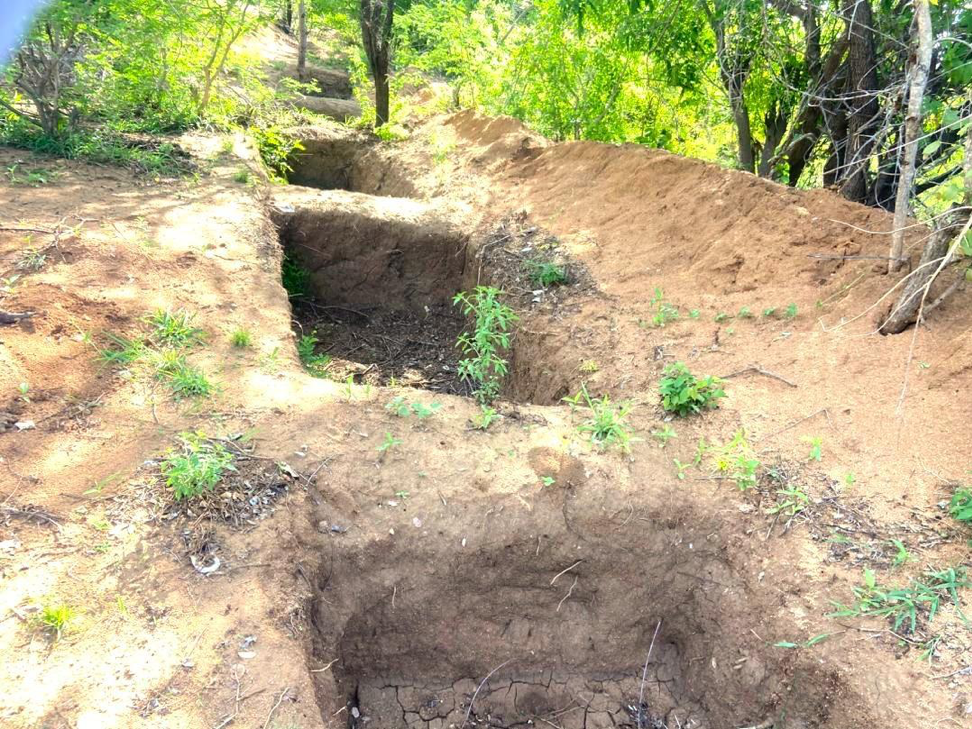
“Our water harvesting has been coupled with integrated farming techniques for maximum land use. As a result, the ground is now holding more water, and the soil is effectively storing it instead of allowing runoff, there is now an enhancement in soil health and moisture retention. Water harvesting structures like contours, swales and infiltration pits have been able to help with water catchment while cropfield impaction has helped with soil fertility management,” she says.
Mirriam says the benefits of adopting these practices have been clear, even allowing her to farm beyond the rainy season.
“These water harvesting and crop field impaction interventions have been beneficial to the community as they help us store rain water underground and eases water challenges during the dry season. For me, my farming activities are no longer reliant on the rainy season as I can plant my tomatoes even during the dry season,” she says.
Learnmore Chaonwa (23), a farmer working closely with Mirriam says the integrated approaches are not just serving the community but future generations as well.
“By integrating water harvesting and holistic management in our farming, we are creating synergies in farming which has resulted in a lot of benefits for our communities such as greater resilience against drought. These initiatives contribute to healthier ecosystems and more sustainable water management, ultimately leading to greater food security for future generations,” he says.
Chitenderano Mutyadzanga (45), the Project Officer at PORETO says these practices not only boost food security and safeguard resources for future generations but are also enhancing community cohesion.
“As farmers come together to collaborate on setting up water harvesting structures, or collaborate on landscape management, they enhance unity as there is a correlation with their individual work.. This unity not only enhances their agricultural efforts but it also fosters long lasting relationships and synergies at household and community level, empowering farmers to support one another,” he says.


