
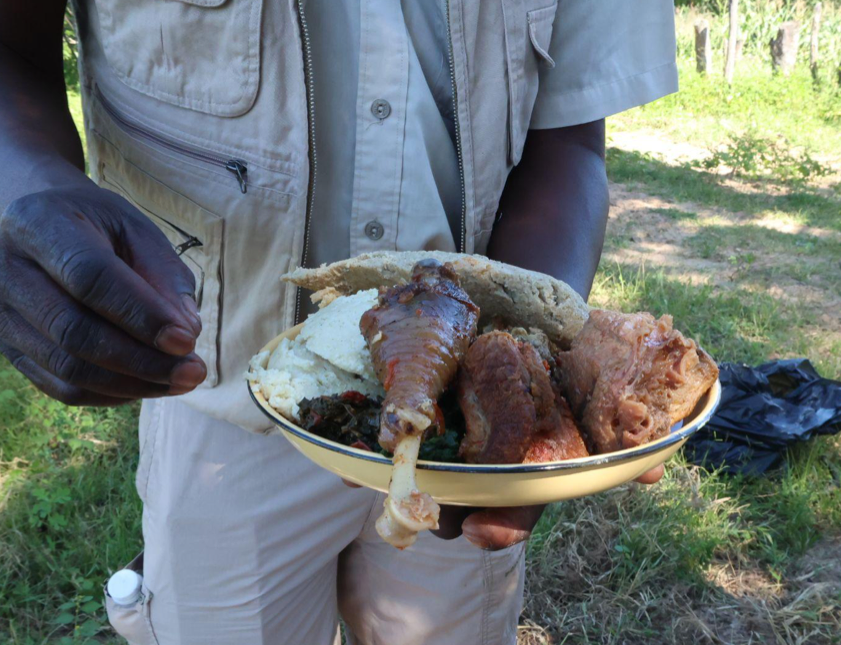
In Ward 23 of Bikita District, in Jeri Village, 55-year-old Charity Mujenge is championing the revival of traditional food systems in her household and community. A smallholder farmer working with Zimbabwe Small Organic Farmers Forum (ZIMSOFF), a PELUM Zimbabwe partner, Charity is growing sorghum and finger millet and passing on vital knowledge about indigenous grains to the next generation.
Charity explains that her journey began at home, after noticing her children’s growing preference for processed foods over traditional meals.
“Before I started introducing traditional foods to my children, they did not like them at all and would refuse to eat when I cooked these meals. Most of the dishes I prepared were mainly maize based and did not include a variety of our traditional grains. As a result, they would turn down sorghum and finger millet porridge and sadza, choosing instead to eat sweeter, processed foods” she says.
Concerned that her children were losing both nutritional benefits and cultural identity, Charity took action. She made a conscious decision to transition her household away from processed foods and back to nutritious, diverse traditional meals. Step by step, she introduced sorghum and finger millet dishes, ensuring her children understood not only how to prepare them, but why they matter.
“After noticing that my children preferred processed foods over our traditional dishes, they were losing our food heritage and missing out on healthy foods. I resolved to take their education on traditional foods seriously. We transitioned entirely from processed foods to nutritious, traditional meals. I instructed them in the preparation and cooking of these dishes and explained the health benefits of such choices. The children have adapted well, now enjoy these foods, and even share traditional recipes with others,” she says.
Charity’s approach goes beyond the kitchen. She involves her children in planting, harvesting, cooking, and even preserving food. Through storytelling, she shares the origins and cultural meaning of each dish, strengthening their appreciation of seasonal foods and local knowledge systems.
“I decided to teach my children the value of our traditional meals. I explain the traditions and origins of each dish, and we make time to cook together regularly. They have begun to enjoy these foods and now prefer them to processed snacks. They also share their knowledge and encourage other children at school to try traditional foods,” she shares.
Nutrition education is central to her efforts. Charity teaches her children how traditional grains support digestion, strengthen immunity, and aid recovery from illness. She emphasises that these foods are not only culturally significant but are also powerful for maintaining good health.
“I teach my children the importance of traditional meals. I get to explain to my children how these foods are nutritious and help build strength, how they support digestion and immunity, and how they can aid recovery from common illnesses more naturally than processed foods”, she shares.
Her son, Tatenda (not real name) (11), confirms the impact of this learning at household and peer level. After attending the Good Seed and Food Festival with his siblings, he became an advocate among his classmates.
“Traditional foods are very important to us. We attended the Good Seed and Food Festival with my siblings and helped prepare traditional meals. I tell my friends at school about the porridge we make from different grains and how it gives sustained energy throughout the day. I also explain how these foods are grown and preserved, and I teach them simple ways to cook and serve relishes that boost nutrition,” he says.
The benefits of traditional foods are echoed by fellow farmer Ndakaitei Chigonye Makuvara (52), also from Jeri Village, who highlights their healing properties.
“Indeed traditional foods work like medicines when I fell ill. The doctors advised me to eat traditional meals, and I got better. The food made me stronger and it improved my appetite. My body recovered and I got the chance to get healthier like ever before. After a short period of time on this diet I was able to return to resume my daily work,” she adds.
Through her actions, Charity is demonstrating how household level change can contribute to broader community transformation. By reclaiming traditional grains, strengthening intergenerational knowledge transfer, and promoting ecological farming systems, she is helping to build resilient families and preserve Zimbabwe’s rich food heritage one meal at a time.


