
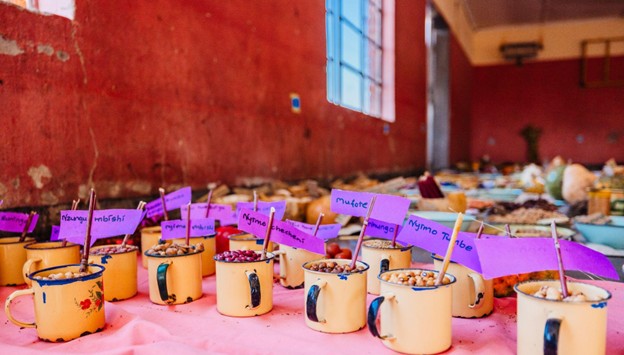
Vimbai Mlambo (64), from Tavengwa Village under Chief Chitsa in Gutu District, is actively promoting traditional foods and indigenous seeds through her participation in the District and National Good Seed and Food Festivals. Living in a region characterised by recurring dry spells and high temperatures, Vimbai has embraced traditional grains and ecological farming practices as pathways towards healthier living, climate resilience, and sustainable livelihoods. Through the festivals, she continues to encourage communities to value indigenous seeds, traditional foods, and local knowledge systems. Photo: PELUM Zimbabwe.
Vimbai joined community activities organized by Chinyika Community Development Trust (CCDT) in 2021 after attending a workshop themed “Without Water, There is No Life”. Through the training and learning platforms, she developed a deeper understanding of sustainable agriculture, indigenous seeds, and the importance of traditional foods in improving household nutrition and strengthening resilience against climate change.
Through the trainings, learning exchanges, and participation in the District and National Good Seed and Food Festivals, Vimbai’s perspective on farming and food systems gradually began to change. Festivals also exposed her to other farmers who were successfully growing drought tolerant crops such as sorghum, millet, rapoko, cowpeas, and groundnuts. Through cooking demonstrations and seed exchange activities, she gained practical knowledge on food preparation, seed preservation, and sustainable agricultural practices that promote healthier and more resilient communities.
“Before attending the trainings and participating in the festivals, I did not fully appreciate the importance of traditional foods and indigenous seeds. Through the District and National Good Seed and Food Festivals, I learned that traditional grains are not only nutritious but also drought tolerant and affordable for our communities,” says Vimbai.
Vimbai specializes in growing traditional crops such as sorghum, millet, rapoko, groundnuts, and cowpeas, and she testifies they perform better under harsh climatic conditions compared to hybrid crops.
“The festivals have taught us the importance of preserving our indigenous seeds and returning to the foods our ancestors used to eat. Traditional foods are healthy, natural, and important for our identity as African people. They are helping families improve nutrition while adapting to changing weather conditions,” she explains.
The District Good Seed and Food Festivals provide opportunities for farmers like Vimbai to exchange seeds, showcase traditional dishes, and share knowledge on ecological farming practices with other farmers within their communities. These district festivals also create pathways for farmers to participate in the National Good Seed and Food Festival, where farmers from different provinces gather to celebrate Zimbabwe’s agricultural heritage and indigenous knowledge systems.
“Vimbai says the festivals have helped restore appreciation for traditional foods within her community while also strengthening relationships among women, youths, and farmers through learning exchanges and food sharing activities. Through the District and National Good Seed and Food Festivals, communities are coming together to celebrate traditional foods and seeds. Farmers are learning from one another and sharing knowledge about healthy eating, seed preservation, and sustainable farming. These festivals are helping us reconnect with our culture and strengthen unity within our communities,” she says.
Apart from improving household nutrition, Vimbai shares how the festivals have also created livelihood opportunities for many women through the selling of traditional grains, indigenous seeds, and value-added food products during exhibitions and food showcases.
“Most farmers are now earning income through selling traditional foods during the festivals. Women are able to market their produce, exchange ideas with other farmers, and learn new ways of processing and preparing traditional foods. This has helped improve livelihoods for many families,” she explains.
Patience Ncube (38), a fellow farmer from Igugu Trust who specializes in social strengthening, says the festivals are helping communities reconnect through food, culture, and indigenous knowledge systems.
“Traditional foods play an important role in bringing communities together because they connect people through culture, farming, and shared experiences. Through the District and National Good Seed and Food Festivals, farmers learn the importance of preserving indigenous seeds and returning to locally produced foods that are nutritious and sustainable. These festivals are strengthening unity while improving household nutrition and resilience within our communities,” she says.
Nomatter Mabhawu (28), Projects Officer at Chinyika Trust, highlights the importance of the festivals in promoting sustainable livelihoods and climate resilience within rural communities.
“District and National Good Seed and Food Festivals are important platforms for promoting indigenous seeds, traditional foods, and ecological farming practices. In areas affected by climate change and water scarcity, traditional grains continue to provide communities with reliable and nutritious food sources while strengthening local livelihoods and preserving indigenous knowledge systems,” she says.
The District and National Good Seed and Food Festivals continue to play an important role in promoting food sovereignty, preserving African food heritage, and encouraging communities to value traditional foods and indigenous seeds as pathways towards healthier, resilient, and self- sustaining communities.


