
Melody Tizwani (39) is a smallholder farmer specializing in livestock farming and the cultivation of traditional grains. Melody is from Jinga Village, Ward 3, Chakohwa, in Chimanimani district. Melody works with the Towards Sustainable Use of Resources Organisation (TSURO) Trust, a member of Participatory Ecological and Land Use Management (PELUM) Zimbabwe.
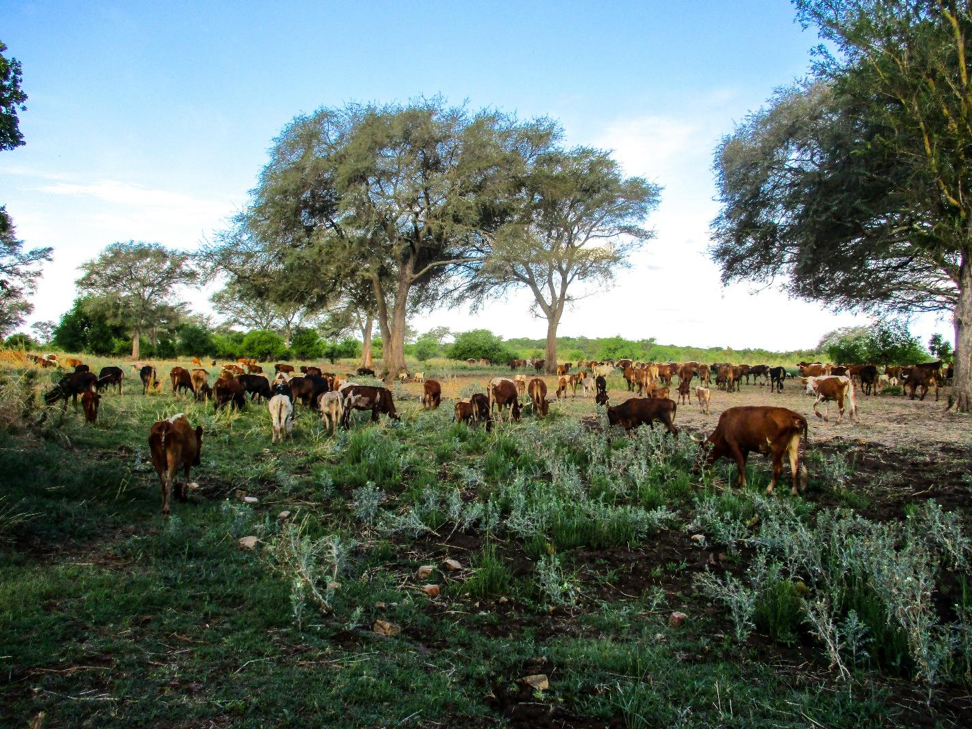
She joined the Holistic Land and Livestock Management (HLLM) program in February 2021 when she started working with a group of 47 farmers, including 20 male and 7 female stock owners, as well as and 20 other members who did not own cattle. Melody is one of the active herders in Jinga Village, where only seven women actively participate as herders.
Melody shares how the HLLM programme has benefited and changed the lives of the entire community.
“The lives of many people in the community have changed. In Jinga village, the HLLM programme has greatly benefited us. We have revived many areas in our community that were once barren. By using the cattle strategically, we allow them to graze in certain places, where they urinate and leave dung. This revitalizes the soil, making the ground suitable for farming. Whenever we farm on the affected ground, we get double our harvest. This method is working perfectly in our area, as a type of grass that was no longer present has returned,” she says.
Melody emphasizes that before joining the Holistic Land and Livestock Management program, they used to send out their cattle without anyone monitoring them.
“Before joining TSURO Trust, we used to let our cows roam outside and would try to fetch them in the evening. We would send them out in the morning and collect them as the sun set and we faced many challenges, such as theft, diseases, drought, and the cows getting lost,” she says.
Melody says that after joining the HLLM program, the way they care for their livestock has significantly changed.
“After I joined TSURO Trust, my community’s approach to keeping livestock has improved, and the way we take care of our animals has changed. As livestock farmers, we now monitor our cattle safely together, and they are always protected by herders who guide them throughout the day and night,” she says.
Melody also mentions that her life has changed significantly because of the HLLM initiative.
“My life has greatly improved in terms of farming. In the past, I could only produce two bags of finger millet, but now I produce six bags or more. This has transformed my way of living and increased my earnings as a farmer. I can now take care of my children and meet my family’s needs,” she says.
Melody says the HLLM program has helped her family financially through strengthening her income. She mentions that she has been able to send her child to school through proceeds from HLLM.
“Through HLLM, my livestock has increased. I used to have 3 cows, but now I have 6. I managed to sell 3 of those cows to pay for my child’s school fees, and my child is now pursuing higher education. Because of this program, I have been able to pay for my child’s fees independently as a woman,” she says.
Melody mentions that as a community, they no longer face the challenges of theft and disease.
“HLLM has benefited us as a community as we no longer encounter many challenges with our cows, such as diseases and theft. Our herders are now there all day and night, watching over the cows. It has become easier for us to notice if a cow is sick or has a problem because we keep them close and check on them every day. In terms of theft, our cows are now safe from thieves because they are constantly protected by the herders,” she says.
Thulani Maphosa (33), Project Officer from TSURO Trust, says his organisation has been working with farmers like Melody in promoting sustainable agriculture.
“Melody is a young, vibrant farmer advocating for change in HLLM. Her way of life has changed, and she is working hard to persuade other youths and the entire community to embrace HLLM. She is also doing an excellent job encouraging other women to become herders. Currently, there are seven actively engaged women herders, and she is doing a great job helping others in the community,” she says.
Julian Makuwa (42), Veterinary Services Officer from Chimanimani shares how HLLM has made tracking cattle much easier and has simplified the process for exchanging breeds in the community.
“With livestock movements restricted to designated areas, it’s now straightforward to monitor each animal’s health and behavior, making it easier to identify and address any issues promptly. Additionally, this system allows for more efficient breed exchanges between farmers, promoting genetic diversity and enhancing overall herd quality,” she explains.


