
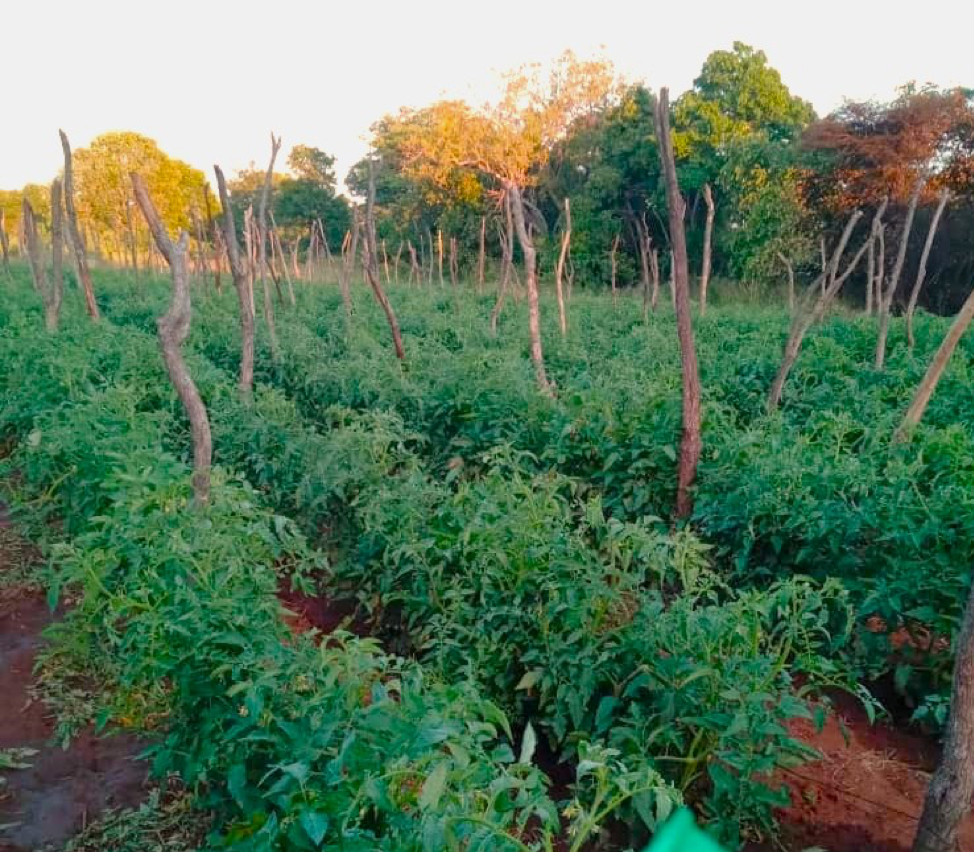
Stephenus Tafirenyika (52), is a passionate smallholder farmer residing in Wayerera Masembura Village, Ward 10, under Chief Masembura in Bindura. He says organic farming has transformed his life.
Stephenus says before he began working with PELUM Zimbabwe member, Farmers Association of Community Self-Help Investment Groups (FACHIG) Trust, he relied heavily on conventional farming methods.
“Before I joined FACHIG, I used to grow my crops using synthetic fertilizers. I had no idea how to make and use organic fertilizers, and often fumigated my crops using harmful chemicals not realizing I was damaging the land,” he shares.
Stephenus started working with FACHIG in 2022 after receiving training on organic farming, which he adopted and is now a proud sustainable farmer, sustainably producing horticultural crops like tomatoes, onions, and sugar beans
“After I joined and attended training lessons on organic farming, including how to make our own fertilizers and traditional remedies for managing crop pests and diseases, I have fully shifted to organic farming. I no longer use any synthetic fertilizers and have fully embraced our traditional ways of farming,” he says.
Stephenus also says he has been a part of PELUM Zimbabwe’s joint learning programmes through FACHIG, which has helped him further strengthen his sustainable practices.
“I have participated in numerous programmes that have transformed my life and my way of living. Programmes such as Zimbabwe Seed Sovereignty Programme (ZSSP) and Holistic Land and Livestock Management (HLLM), have taught me effective farming techniques, improved my crop yields, and helped me adopt sustainable farming practices. As a result, I now produce healthy and good quality products which has also increased the income I get from selling my produce.” he says.
Memory Madyangove (52) Agricultural Business Advisory Officer working closely with FACHIG, shares her appreciation for Stephanus’ hard work.
“Stephenus is a remarkable example of hard work in our community. He has exemplified putting theory into practice and this is seen by how practical he has been with agroecology,” she says.
Mufaro Mupetesi (27), the Programmes Officer for FACHIG, says farmers are positively embracing agroecology as a sustainable vehicle for driving community development, food security and sustainability.
“Farmers are not just adopting traditional seeds and sustainable practices, they are actually experiencing real improvements in their lives. For instance farmers like Stephenus are a perfect example of the transformation. They are clear examples of how agroecological practices can make a difference in farmers’ lives. The shift towards sustainability is important because it helps ensure food security, encourages healthier living, and strengthens relationships in communities,” he says.


