
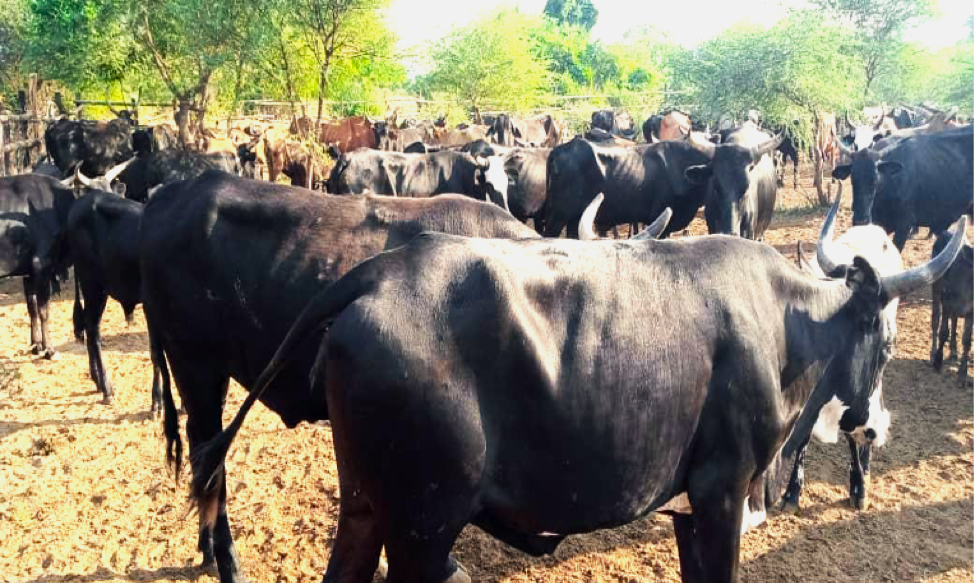
Joel Muchinacho, 35, is a herder from Mabasa Village, under Chief Chikukwa in Chimanimani, actively working with Chikukwa Ecological Land Use Organisation (CELUO), a PELUM Zimbabwe member organisation. Joel joined CELUO in 2019 and has since embraced his role as a community herder since enrolling in the Holistic and Livestock Management program. In addition, he contributes to the monitoring and management of best practices within the community.
Joel shares how they used to manage their livestock before joining the Holistic Land and Livestock Management (HLLM) program in CELUO.
“After I joined the HLLM programme, I realised that our community was not careful with our livestock. We did not have a proper grazing plan. We would just open the gates and let the cattle go grazing on their own, and collect them in the evening. This lack of organization often resulted in unproductive grazing and health issues among the cattle,” says David.
After joining CELUO, David’s perspectives and approaches to livestock management have changed.
“Since I joined CELUO, our community’s herding practices have changed significantly. I have managed to convince other members of our community to follow the HLLM approach. We take full time care of our cattle and are now using essential skills, including effective herding techniques, using boma sheets for better cattle management, and understanding the importance of crop field management,” he shares.
Joel has attended many trainings organized by CELUO, and through these trainings, he has become a vital link in the knowledge exchange within his community. He has positively influenced other youths, inspiring many to join the program.
“I have attended a lot of trainings organised by CELUO and I have managed to train other youths in my area on HLLM practices, and as a result, they have been able to buy cattle of their own, improving their livelihoods and contributing to our local economy,” he says.
Joel shares how his life has changed since he joined the HLLM program.
“When I started working as a herder, I had only 3 cows in 2019, but now I have 20 cows of my own of different breeds,” he shares.
The HLLM program has not only improved Joel’s life but has also fostered a sense of community in his area.
“This program has enhanced unity among us. Many people in our community are now united, working together towards sustainable livestock management. The HLLM program has played a crucial role in creating social bonds and unity within the community. The program is also encouraging farmers to collaborate in managing their resources, fostering a culture of teamwork and mutual support in the community,” he says.
Wellington Muchita (58), a Project Officer from CELUO, shares how Joel is leading others in his community.
“Joel’s unwavering dedication to applying his knowledge and inspiring others is a shining example of transformative leadership in our communities. His journey highlights the impact of holistic practices towards youth development and empowerment,” says Wellington.
Mahaka Stanley (42), an Agricultural Business Advisory Officer working with CELUO, says the HLLM program is playing a crucial role in Chikukwa Village.
“The HLLM program is essential for promoting sustainable agricultural practices in our community. This initiative is pivotal for enhancing food security and improving the livelihoods of smallholder farmers. Joel has encouraged more youth to engage in this program, as it is vital for development and empowerment of the Chikukwa community,” he says.
As a young leader, Joel’s dedication to better livestock management is not only changing lives but also helping build a brighter future for Mabasa village.


