
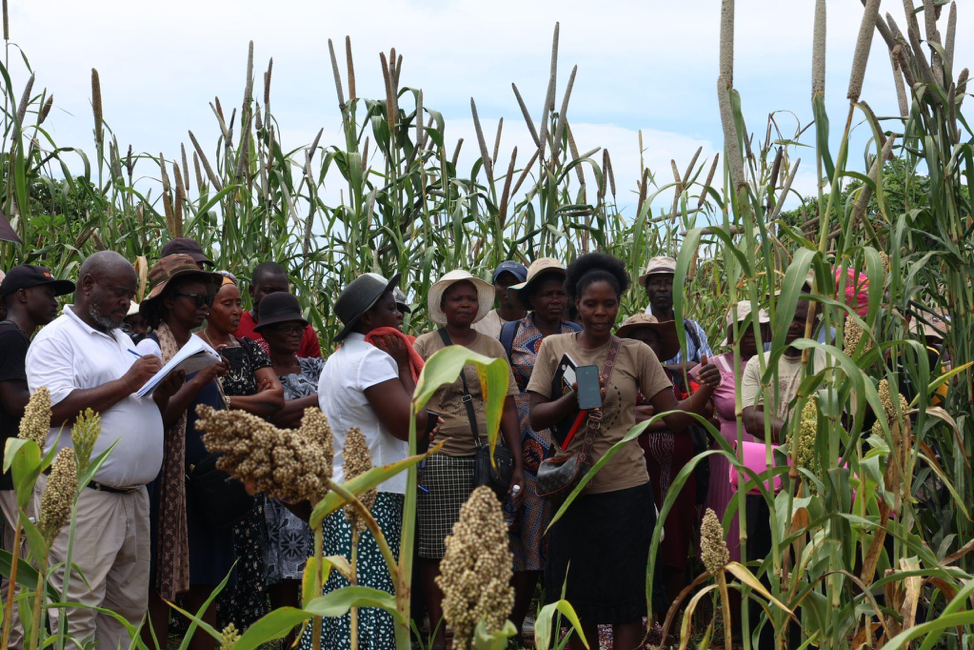
Shamiso Mpofu (49) is a smallholder farmer from Kachecheti Ward 3, BH9 Ndhlovu Village, who specializes in growing traditional grains such as mhunga (sorghum), finger millet, pumpkin seeds, cowpeas, and groundnuts. She serves as a key member of Igugu Trust, contributing significantly to seed and food initiatives. Shamiso joined Igugu Trust in 2017 after developing a strong interest in seed preservation and sustainable food practices.
Before she joined Igugu Trust, Shamiso had a basic understanding of traditional foods but had not specialized in them. She often relied on conventional farming methods and did not recognize the nutritional and cultural value that these traditional foods offered. After joining Igugu Trust in 2017, her perspective changed significantly.
“Before I joined Igugu Trust, I had a basic understanding of traditional foods and relied on conventional farming methods. I knew some of the traditional grains we grew, but I did not fully appreciate their importance or how to utilize them effectively. But after joining Igugu Trust and receiving training, I realized the nutritional and cultural value that these traditional foods offer. I have come to understand how traditional foods connect us to our heritage and identity. I got to understand that they are not just crops, they represent our culture and the health of our community,” she reflects.
Shamiso says she has managed to convince and work with many farmers and women on traditional foods, encouraging them to eat the locally produced food they grow on their own and the food they cultivate with their own hands.
“I have managed to convince and work with many farmers and women in my community to embrace traditional foods, encouraging them to eat locally produced food, food they grow with their own hands. These foods are deeply rooted in our culture and heritage, packed with nutrients that support our health and resilience against modern challenges. By choosing traditional foods, we preserve our identity and empower ourselves, fostering pride in our heritage and strengthening our community.”
Shamiso also emphasizes that our traditional foods are healthier than ever. They help people look even younger than their age because of their rich nutritional content. Additionally, through learning exchange visits, we connect with one another and share important knowledge about the benefits and preparation of these foods.
“Our traditional foods are among the healthiest options available, they contribute to a youthful appearance and foster overall well being due to their rich nutritional content. Through organized learning exchange visits, we are able to connect with one another and share valuable knowledge regarding the benefits and preparation of these foods. Such experiences not only strengthen our community bonds but also empower us to fully appreciate the health advantages of consuming what we cultivate ourselves,” she shares.
Patience Ncube (38), a fellow farmer from Igugu Trust, specializes in social strengthening and shares her work in the community regarding traditional foods and their role in fostering community cohesion.
“In Igugu Trust, we have made significant strides in educating people about food and its capacity to strengthen our community as a whole. Whenever people gather for meetings or events, food becomes a unifying force. It not only creates bonds but also fosters relationships, engendering a sense of belonging and mutual support. By embracing our traditional foods, we are reinforcing our cultural identity and empowering one another to build a more resilient community,” she explains.
Angina Chokunyanya (52), an Agricultural Business Advisory Officer (ABAO), comments on the importance of the work being done by Igugu Trust and the importance of learning exchange in the communities.
“Initiatives like learning exchange visits significantly empower farmers by allowing them to share knowledge and best practices. Such collaborative efforts lead to improved agricultural techniques and better nutritional outcomes, as communities come together to learn from one another. This spirit of cooperation also cultivates a sense of belonging and mutual support, breaking down barriers and uniting individuals through shared goals and this holistic approach uplifts individual farmers and strengthens the entire community,” she says.


