
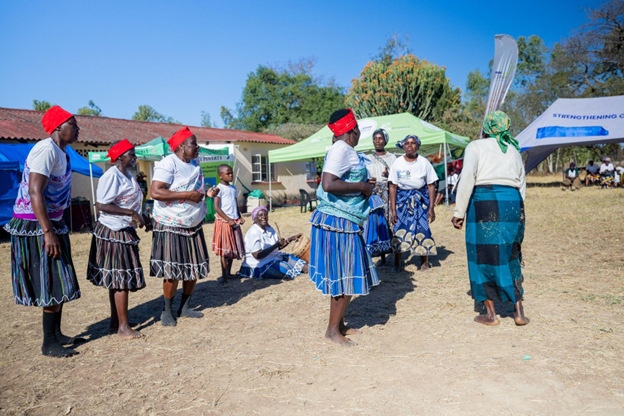
In Mwenezi District, where droughts and erratic rainfall threaten farming livelihoods, women farmers are safeguarding the future of agriculture through community seed banks. By saving and sharing indigenous seeds, they are preserving biodiversity and strengthening resilience against climate change.
Simbisai Machava (61), a smallholder farmer and community leader, is widely recognized as a guardian of seeds. For her, seeds are more than planting material.
“Seeds carry our history, our culture, and the survival of our communities. When farmers rely entirely on purchased seeds, they slowly lose control over their food systems. But when we save and share our own seeds, especially the traditional varieties, we remain independent and resilient,” she explains.
Her journey deepened after joining the Mwenezi Development Training Centre (MDTC), where she learned seed multiplication and preservation methods. She recalls:
“Before I joined, I used to believe maize was the most important crop. But when I started learning about agroecology, I realised that sorghum, millet, and cowpeas are much stronger. They survive drought, require fewer inputs, and provide nutritious food for our families.”
Simbisai now promotes community seed banks as vital spaces for both storage and knowledge exchange.
“A community seed bank is not just about keeping seeds on shelves. It is a space where farmers meet to exchange knowledge, tell stories about crop varieties, and teach younger generations about our farming heritage. Women in particular play a very important role because they traditionally select, preserve, and pass on seeds,” she says.
Seed fairs and Good Seed and Food Festivals further strengthen these networks.
“When we gather at community seed fairs, we celebrate our identity as farmers. We share seeds freely, but beyond that, we share ideas about how to grow, store, and adapt them to changing weather patterns,” Simbisai adds.
Other farmers echo her views. Precious Matsheza notes that women farmers are the guardians of knowledge through promoting seeds.
“Women farmers hold a wealth of knowledge about traditional crops and seed preservation. If we stop saving our seeds, we risk losing the crops that sustained our ancestors. But when we continue sharing seeds and knowledge, we secure the future of our food.” says Precious.
Lloyd Ruvengo (34) echoes the same sentiments sharing that seed saving promotes indigenous knowledge preservation.
“Women have always been the keepers of seeds. MDTC is doing a great job supporting them through trainings, exchange visits, and community seed banks to ensure indigenous knowledge is preserved.” he says.
Through her commitment to seed sovereignty, Simbisai Mashava and fellow women farmers are ensuring that the seeds and wisdom passed down through generations continue to shape resilient, sustainable food systems in Mwenezi and beyond.


