
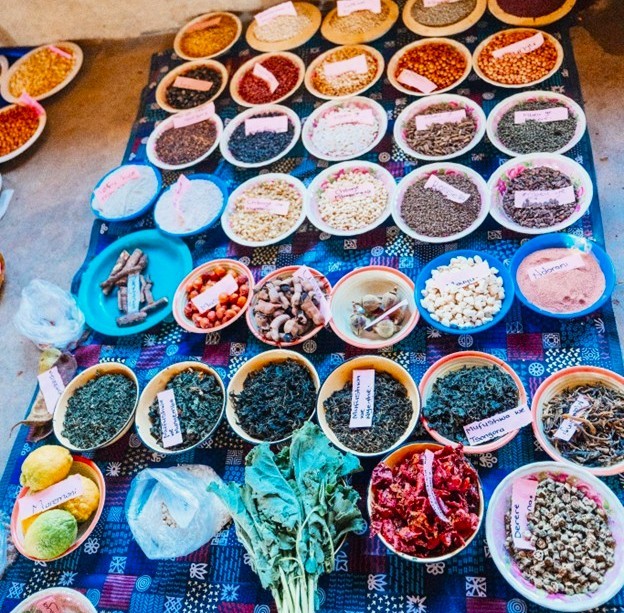
Sainabu joined Musoromuchena Skills for Life in 2004 after developing a passion for traditional foods and women empowerment. She specializes in growing traditional crops such as groundnuts, cowpeas, peanuts, finger millet, pearl millet and sorghum using local farming knowledge passed down through generations. Over the years, she has become one of the leading voices advocating for the preservation of indigenous seeds and traditional food systems within her community.
Before joining Musoromuchena Skills for Life, many women in the community had limited opportunities to generate income and had slowly drifted away from traditional foods and farming practices. However, after joining the group, Sainabu says she began to appreciate the importance of traditional grains and indigenous seeds in improving health, livelihoods, and community resilience.
“When I joined Musoromuchena in 2004, I realized that traditional foods are more than just food, they are part of our culture, health, and identity as a people. Through the group, we learned how important indigenous seeds are and how traditional foods can help improve our health and livelihoods. Many people had abandoned these foods, but now communities are beginning to appreciate them again,” she explains.
Through the support and unity within Musoromuchena Skills for Life, the women have managed to establish different livelihood projects aimed at improving their economic wellbeing. Apart from growing and promoting traditional foods, the women are involved in sewing projects, gardening, food processing, and savings initiatives locally known as mikando. Through these savings and lending activities, the group has managed to buy livestock such as goats and chickens, and also support different income generating projects among women in the community.
“As a club, we have managed to carry out different projects as women through our savings groups and by working together. We have managed to buy goats, chickens, and support various projects within our group. Women are now able to support their families and improve their lives through the knowledge and opportunities we are creating together,” she says.
Musoromuchena Skills for Life has also become an important platform for promoting women and youth participation in community development activities. Through trainings, cooking demonstrations, and community learning sessions, women and young people are learning how to grow traditional crops, prepare nutritious meals, and preserve indigenous knowledge systems for future generations.
“We are working hard to involve women and youths in our programs because they are the future custodians of our traditional knowledge and seeds. We teach them how to grow traditional crops, how to do seed saving and prepare healthy traditional dishes using foods that are locally available,” she explains.
The group regularly participates in community programs, exhibitions, and food related events where they showcase traditional dishes prepared from indigenous grains such as finger millet, sorghum, cow peas, and groundnuts. Their work has helped revive appreciation for traditional foods within the community and beyond. The promotion of traditional foods has also contributed to noticeable health improvements within the community. She believes that more families are returning to healthy eating habits and moving away from highly processed foods.
“With traditional seeds and traditional dishes, we have seen many changes in our communities. Cases of chronic diseases are going down because people are now eating healthier traditional foods. These foods are organic, nutritious, and free from harmful chemicals. We are seeing families becoming healthier because of returning to the foods our ancestors used to eat,” she says.
Through the initiatives led by Musoromuchena Skills for Life, many women have also managed to become financially independent through selling traditional foods and agricultural produce. Sainabu explains that several women are now able to pay school fees for their children and support their households through income generated from their projects.
“A lot of women are now earning a living through traditional foods and farming. Some are now able to pay school fees for their children and provide for their families without depending entirely on others. This group has empowered many women to stand on their own and believe in themselves,” she explains.
Tsitsi Mangwaro, (60) Environmental Technician from Musoromuchena Skills for Life highlights the importance of initiatives like Musoromuchena Skills for Life in promoting sustainable livelihoods and preserving indigenous knowledge and women led initiatives.
“Women’s groups promoting indigenous seeds and traditional foods are playing a very important role in improving household nutrition, food security, and community resilience. Traditional grains such as sorghum, millet, and rapoko are climate resilient and highly nutritious. These initiatives are also preserving indigenous knowledge systems while creating livelihood opportunities for women and youths within rural communities,” he explains.
Hluphekile Mujuruki (49), the Director at Musoromuchena Skills for Life, highlights the significant benefits that farmers have gained from the programs they are engaging in g at Musoromuchena Skills for Life and shares the vision behind forming the organization and the impact it continues to create within communities.
“When Musoromuchena Skills for Life Organisation was formed, our goal was to create a safe and empowering space where women could come together, preserve traditional knowledge, and improve their livelihoods using resources available within their communities. Over the years, we have seen women becoming more confident, independent, and proud of their culture through promoting traditional foods and sustainable livelihood projects. It is encouraging to see women now earning income, paying school fees for their children, and mentoring younger generations through the knowledge they have gained from the group,” she says.


