
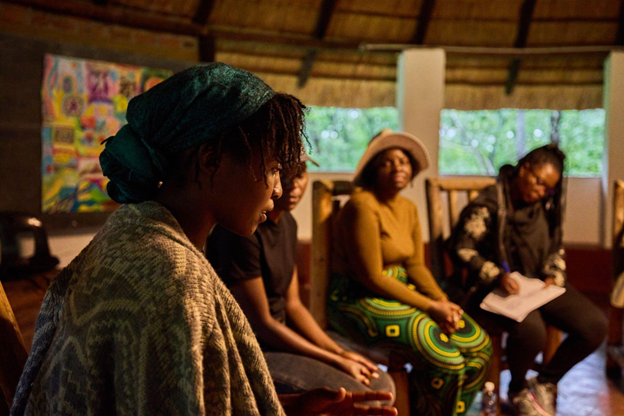
Valerie Chatindo (30) is part of the African Women in Agroecology Leadership in Agroecology (AWOLA) Mentorship Program, an initiative designed to strengthen women’s leadership in agroecology across Africa. Since joining the program in May 2025, Valerie has discovered new ways to connect her passion for communication with the movement for sustainable food systems.
Before AWOLA, Valerie’s work in agroecology was largely through storytelling.
“As Communications Lead at Teach For Zimbabwe, I documented and amplified climate initiatives led by fellows and schools. I focused on climate education, school gardens, and community-based environmental projects. Although I was not directly farming, I highlighted the stories of young people and communities responding to climate challenges. My work aimed to make these initiatives visible and valued,” she recalls.
For Valerie, joining AWOLA opened a new chapter in her life.
“After joining AWOLA, I discovered a transformative opportunity to engage more intentionally with agroecology as both a knowledge system and a lived experience. The mentorship program has equipped me with tools to explore the connections between culture, land, and food systems. I have gained hands-on experience and a deeper understanding of sustainable practices while participating in workshops, discussions, and field visits. AWOLA has truly broadened my perspective and strengthened my commitment to advocating for sustainable food systems,” she says.
Valerie was drawn to the program after noticing a gap in how African agroecology movements are communicated.
“Much of our indigenous knowledge and cultural practices have been disrupted or marginalized. Many of us are searching for this valuable information, often finding it fragmented or inaccessible. AWOLA offers a unique opportunity to bridge these gaps, elevate our voices, and support the revitalization of our food systems,” she explains.
Valerie says through mentorship, her understanding of agroecology has deepened.
“I now see agroecology not just as a farming method but as an interconnected system that encompasses culture, knowledge, food, land, people, and power. Learning from mentors and fellow mentees through shared conversations and storytelling has made the experience organic and rooted in real-world contexts. I feel more grounded, informed, and intentional in my engagement with agroecology going forward,” she shares.
The program, she says, has also sharpened her skill as a communicator, and adds that she has been empowered to effectively use her communication skills.
“I have gained practical skills in development communications, advocacy, and network building. AWOLA boosted my confidence as a communicator and facilitator, allowing me to use storytelling as a powerful tool for movement building and policy influence. It has deepened my sense of purpose and identity, particularly concerning African knowledge systems, culture, and food sovereignty,” Valerie reflects.
Her peers echo similar experiences. Whitney Mudzingwa (22) emphasizes the empowerment mentorship brings:
“Being part of this mentorship has empowered us to take our ideas seriously and amplify our voices. Women play a crucial role not only in practicing agroecology but also in shaping how it is understood and shared. Through mentorship and collaboration, we are strengthening our ability to document indigenous knowledge and advocate for sustainable food systems,” she says.
Melody Mahofa (25) highlights the confidence and leadership skills gained:
“The AWOLA mentorship program has created a powerful platform for women to share knowledge, build confidence, and take leadership in agroecology. For us as mentees, AWOLA is more than a learning space but is a source of empowerment, connection, and purpose. Through this supportive network, we are growing individually while contributing to a collective movement that is transforming food systems across our communities,” she explains.
Together, Valerie, Whitney, Melody, and their peers are shaping a new generation of women leaders in agroecology, leaders who are documenting indigenous knowledge, amplifying African perspectives, and building resilient food systems for the future.


